
My new garden is afflicted with weedy non-native plants in the legume family: white and yellow sweet clover, alfalfa, vetch, and black medic. Even red clover, which I used to think was, yes, non-native but mostly benign, is a problem weed here. A little way down the road is a big patch of crown vetch – thankfully not on my property. This suggests that the soil here is low in nitrogen. Plants in the legume family, as well as some others, host bacteria that can fix atmospheric nitrogen for the plants’ benefit, and in low nitrogen soils, these nitrogen-fixers can outcompete other plants. All this has given me a renewed interest in growing native and near native plants in the legume family (the Fabaceae).
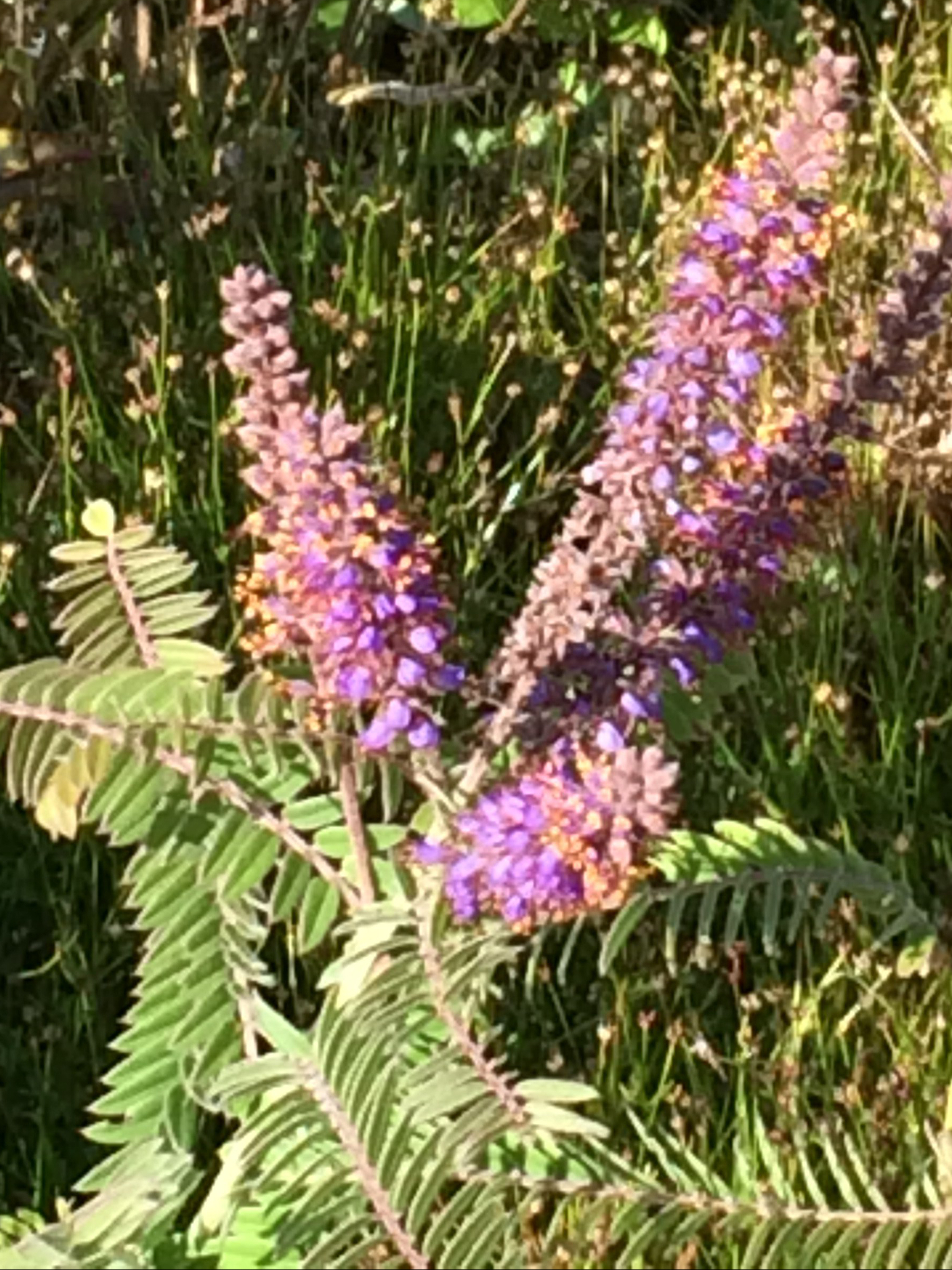
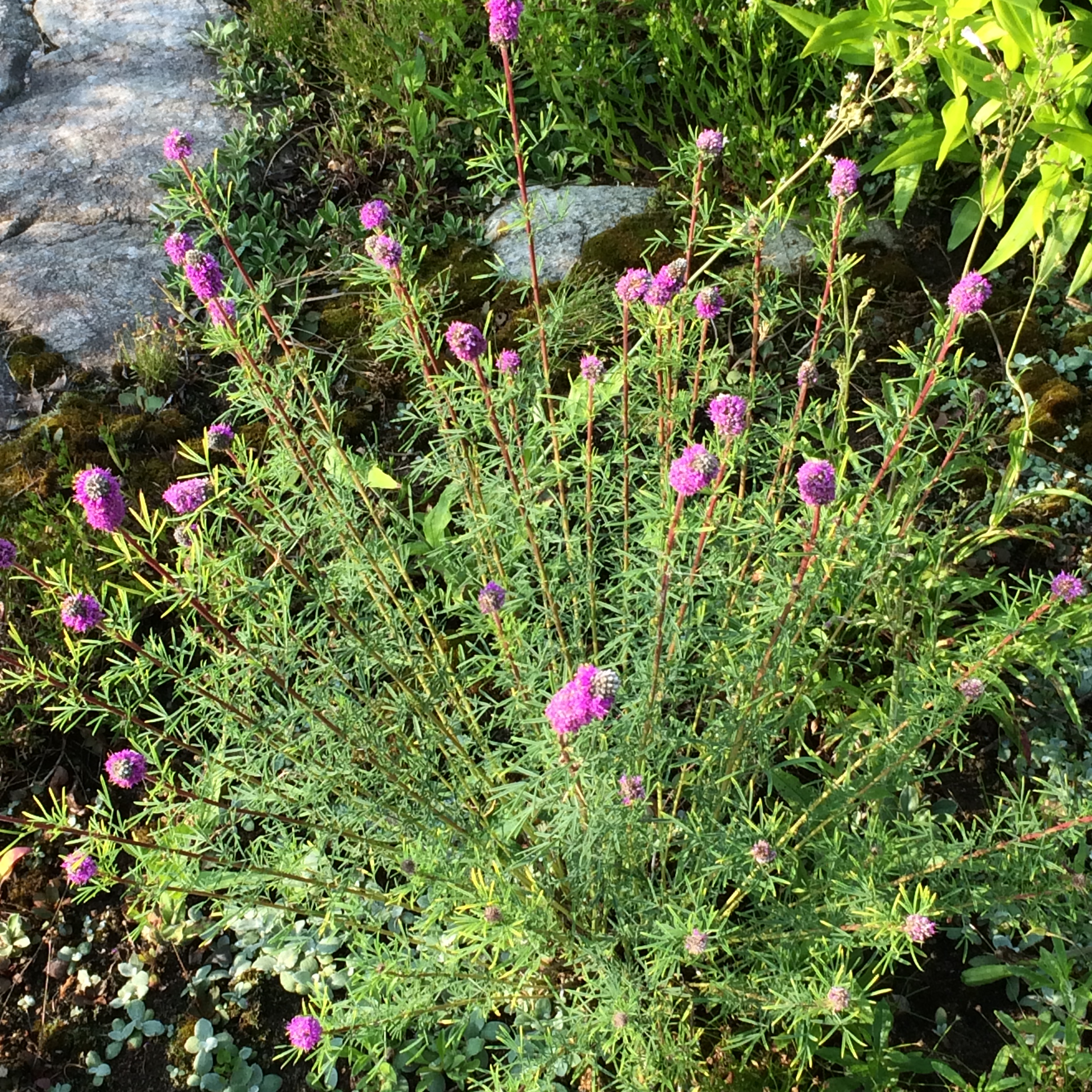
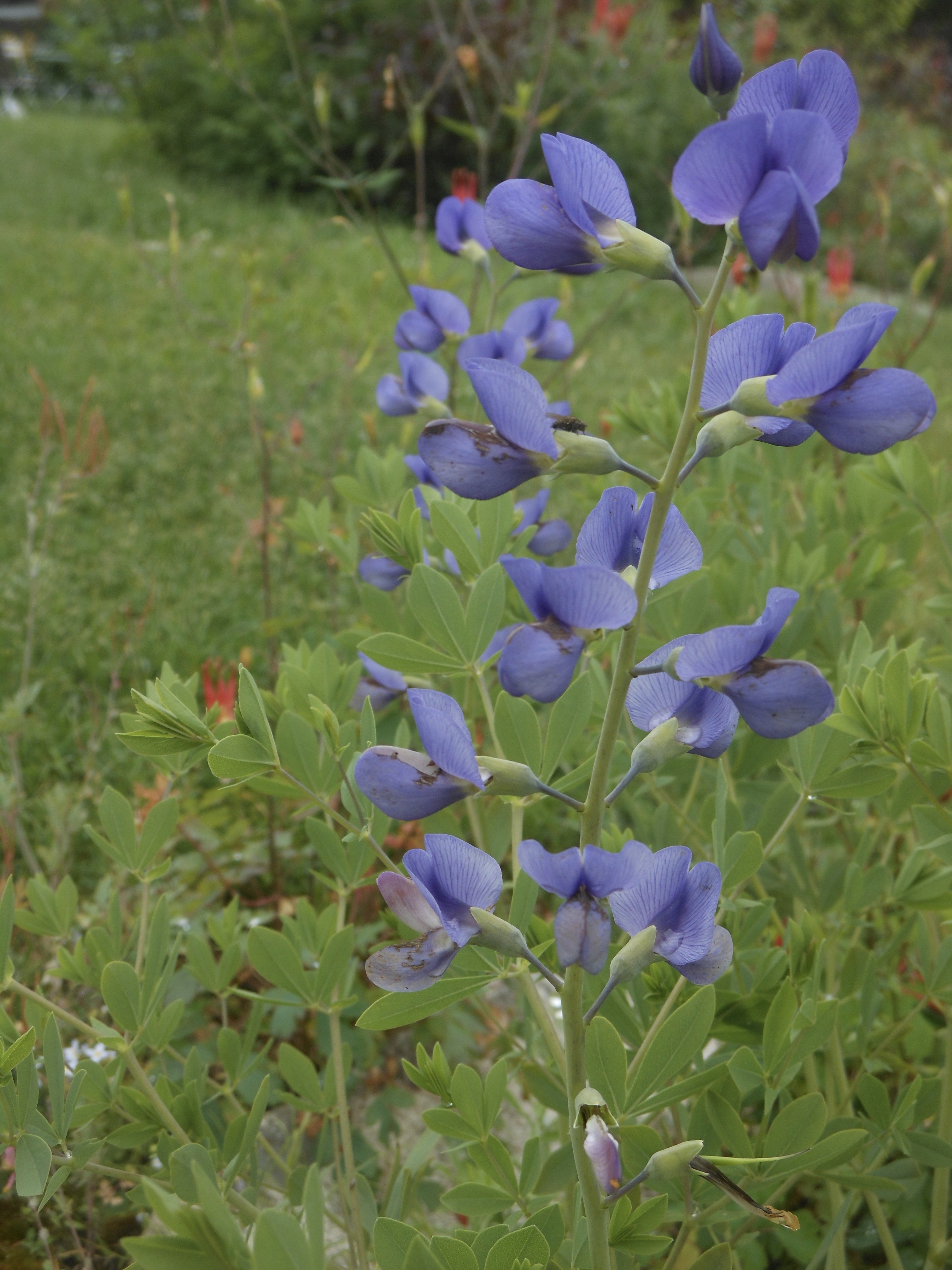
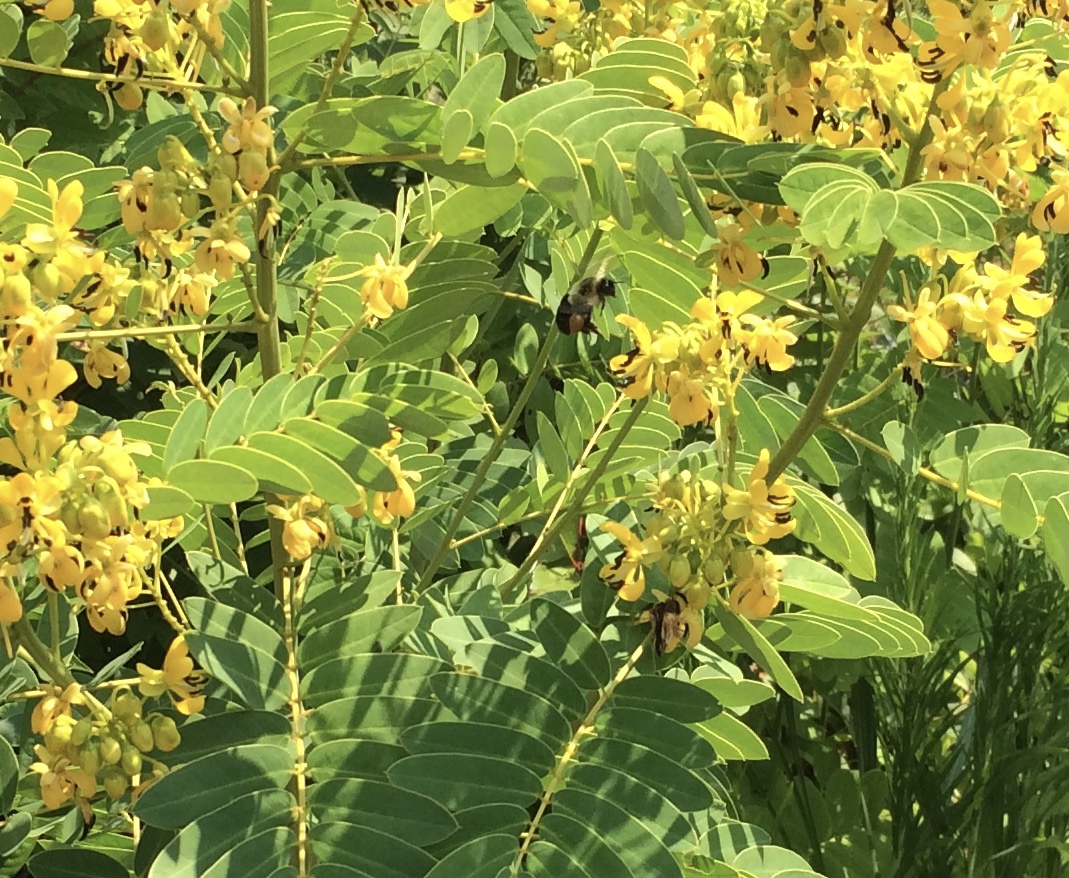
For some time, I have grown and promoted some very showy and garden-worthy near natives: lesser wild blue indigo and Carolina lupin, from the eastern USA, purple prairie clover and leadplant from southern Manitoba, and wild senna from Carolinian Ontario. These are all utterly lovely and deserve to be in every garden. They fix nitrogen, for their own benefit, and, ultimately, the benefit of the soil and other plants, but mostly they are just really nice flowers your garden.

There are some leguminous wild flowers native to the Ottawa valley but none is the universal solution to a low nitrogen soil. They all have their quirks.
Probably the easiest to grow is the very pretty showy tick-trefoil (Desmodium canadense). It is indeed showy, with lots of pink flowers. It is about 4 or 5 feet tall and is a lovely, even necessary, component of eastern prairies and sunny or mostly sunny meadows throughout our area. I think you should grow it if you are attempting a meadow. BUT, but, but its seeds, like all the tick-trefoils’, stick themselves in dog fur* and can be a real nuisance if you have a soft-coated or long-haired dog. So it needs to be sited carefully, well away from paths.
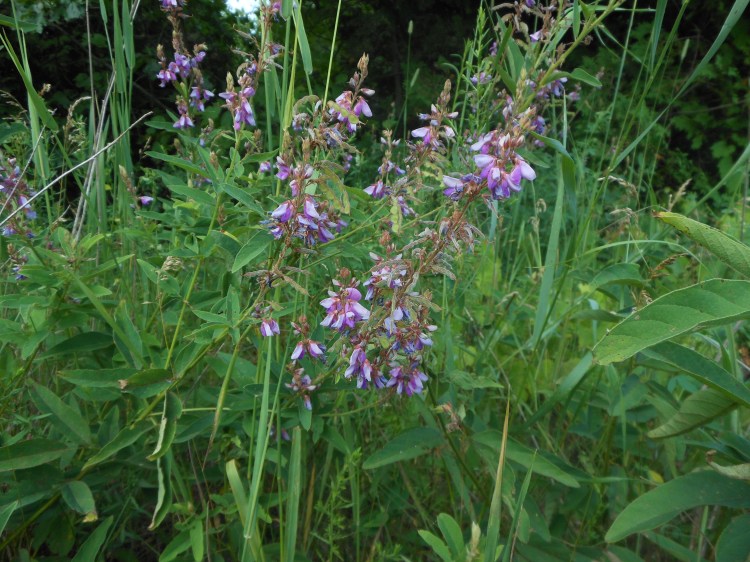
The other Desmodiums (Desmodia?) are denizens of shadier spots, open forests and woodland edges. Their flowers are smaller, but still very charming. The species in this group that I am offering this year I grew from seed that was labelled confused tick-trefoil (Desmodium perplexum). I am not convinced. I am indeed perplexed. I need to see a more mature specimen, especially the minute characteristics of its seed shape. However, from the point of view of a gardener, it shouldn’t matter. They are all much alike and worthy of a spot in a shade garden – away from dog-trodden paths.
Another necessary meadow species is round-headed bush-clover (Lespedeza capitata). You do want this in a meadow, but it is just not showy enough to justify planting it in a flower border. The flowers are cream and deeply embedded, almost hidden, in the green sepals. The dense brown seed heads of this plant are a nice feature in late autumn, so, yes, enjoy it in a meadow or prairie planting. There are some other, potentially more garden-worthy native Lespedeza. One I have seen, in a wild area south of Hamilton, is violet bush-clover. I think this could be very nice in a larger rock garden and if I can source some seed, I will give it a try.
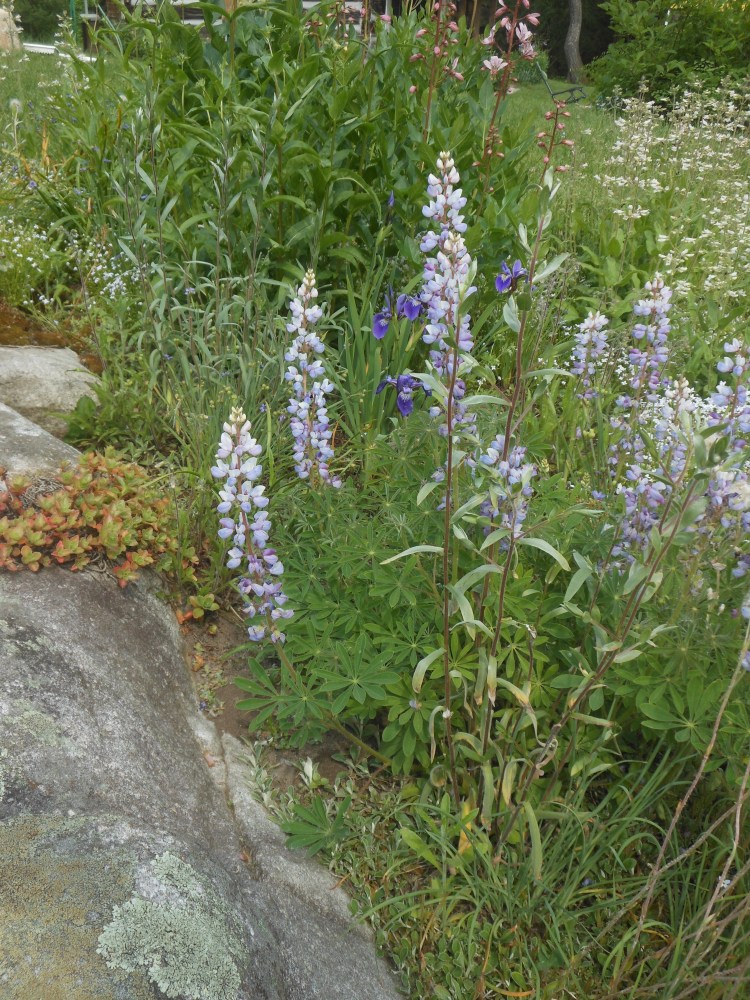
We have a lovely native lupin (Lupinus perennis). This is not the garden lupin in diverse pastel shades that every body knows and which did so well this spring. Our native lupin is short and always violet-blue. It is something of a sand specialist and does not thrive on other soils. I am going to try it anyway on my non-sand soil here, because you never know. Sometimes plants haven’t read the books. I will plant it on the top of a bank so it is at least well-drained.
Hooker’s milkvetch is a rare species, entirely restricted to alvars. Canada milkvetch (Astragalus candensis) should be more adaptable but I have not found it easy to establish. Once it settles in to a site where it is happy, it is a tough and enduring plant. It has cream flowers in early summer. I want to have it in my new garden. I have a few seedlings for sale if you want to give it a try in your garden.


I have offered American groundnut (Apios americana) for sale for a few years but it is not a big seller. American groundnut is an important plant in First Nations cooking. I know there is enormous interest in First Nations cuisine and in foraging. The problem is, it is hard to find a spot in the garden for an herbaceous vine that spreads by underground tubers. Folks are intrigued, they admire the distinctive maroon-pink flowers, and then shake their heads. They cannot think where they could put it. I am having the same problem myself. I am not going to give up. The flowers are special and the tubers are tasty, a lot tastier than Jerusalem artichokes, in my opinion.
There are other flowers in this family which have garden potential. I tried the very lovely goat’s rue at Beaux Arbres but it didn’t thrive. I discovered it needs a calcareous soil, which I have now, so I will try it again, if I can source some seeds. There is marsh vetchling, which probably needs a marsh. There are some lovely small species from the short-grass prairie, doubtlessly heat and drought tolerant, which could be nice in a rock garden… I could spend more time sourcing seed if I didn’t have to spend so much time pulling weedy yellow sweet clover and that blasted black medic…
Many of the plants mentioned in this post are on my current Plant Availability list.
*Also shoe laces.

 Beaux Arbres Plantes Indigènes / Native Plants
When I was growing up, we used to collect American groundnut tubers and roast them. Such a delicious flavor. I’ve managed to get some to grow where I live now, but not close to the gardens. Not yet, anyway.
LikeLiked by 1 person
I have only had them roasted but I, too, liked them very much. Much tastier than Jerusalem artichokes. My understanding is that all parts of the plant are edible, and, if you have a plant that sets seed, the pods may also be eaten.
LikeLiked by 1 person